


Thinking of moving from Sydney to Brisbane in 2026? This practical relocation guide compares housing, jobs, lifestyle, infrastructure, schools, commute risk and family trade-offs using current data and a realistic Sydney-to-Brisbane decision framework.
Moving from Sydney to Brisbane in 2026: Work, Housing and Lifestyle Reality Check
Moving from Sydney to Brisbane is no longer just a lifestyle idea. For many professionals and families, it is a practical decision about housing, work, schools, commute time and long-term quality of life.
This guide looks at the real trade-off: what improves, what becomes harder, and who the move actually suits.
Is moving from Sydney to Brisbane worth it in 2026?
For many Sydney families and professionals, Brisbane can be worth serious consideration - but only if the move improves the whole equation: housing, income, schools, commute, climate, support network and career resilience.
Why the Sydney-to-Brisbane move is getting serious
A few years ago, moving from Sydney to Brisbane felt like a lifestyle compromise. Today, for many professionals, it looks more like a trade-off worth modelling properly.
Sydney still has scale, deeper corporate networks and a larger technology market. But the pressure points are obvious: high housing costs, long commutes, congestion and the feeling that many households are working harder just to stand still.
Brisbane is not perfect, and it is no longer “cheap”. However, it offers a different balance: a growing economy, warmer climate, more space, expanding infrastructure and easier access to coastal and outdoor living.

The Sydney-to-Brisbane decision is really a lifestyle, housing and career trade-off.
What changed since the original Sydney-to-Brisbane migration story
The original version of this topic was built around the broad post-pandemic migration story. The better 2026 version is more measured: Brisbane is still growing strongly, but the easy “cheap escape from Sydney” narrative is outdated.
According to the ABS Regional Population 2024–25 release, Melbourne had the largest capital-city growth, followed by Sydney, Brisbane and Perth. Brisbane added about 58,200 people and grew by 2.1%.
The same release shows that Brisbane remains part of the national growth story, even after the most intense post-pandemic relocation period cooled. That matters because population growth supports jobs, infrastructure demand and housing demand - but it also creates pressure on rents, roads and services.
Housing: Brisbane is still cheaper than Sydney, but not casually cheap
The old version of this article used rough median prices. That is risky for SEO and reader trust because property numbers move quickly. A better approach is to frame the housing question around relative affordability and cite the source date.
The Domain March 2026 House Price Report reported a Sydney median house price of $1,791,643. The same report placed Brisbane well below Sydney but firmly in expensive-capital territory. The key takeaway is not that Brisbane is cheap - it is that the gap can still change what type of home a Sydney household can afford.
| Question | Sydney reality | Brisbane reality | Relocation implication |
|---|---|---|---|
| Buying a family home | More expensive and often further from the CBD if you need space. | Still more achievable than Sydney in many areas, but good suburbs are no longer bargain territory. | Run suburb-by-suburb comparisons instead of relying on city medians. |
| Renting first | High competition and high weekly costs in desirable family suburbs. | Also tight, especially for houses near schools, rail and lifestyle areas. | Renting before buying can reduce suburb-choice mistakes, but you need to budget for a competitive rental search. |
| Suburb choice | Often a compromise between price, school zone and commute. | More lifestyle variety: inner-city, north, south, west, bayside and Redlands corridors. | Choose by daily life first: school run, commute, heat tolerance, transport and weekend lifestyle. |
| Long-term value | Greater scale and global-city demand, but higher entry price. | Growth is supported by population and infrastructure momentum, but price growth is not guaranteed. | Do not move purely on capital-growth expectations; move because the lifestyle and budget work. |
For families moving from Sydney, the appeal is not simply “cheap houses”. It is the chance to buy or rent a more practical home while staying connected to a growing capital city.
Work and technology: smaller than Sydney, but more serious than it used to be
Sydney still has the larger technology and finance job market. That has not changed. But Brisbane’s technology story is becoming more credible, especially across cloud, cyber security, health technology, engineering, construction technology, logistics, government transformation and AI-enabled business services.
Choose Brisbane positions the city around industries including health, property and construction, logistics, advanced manufacturing and business services. For IT professionals, that matters because digital work often follows these sectors: cloud platforms, integration, cyber, data, AI, infrastructure and managed services.
For IT professionals, the best relocation strategy is not to assume Brisbane will mirror Sydney. It will not. The market is smaller and networks matter more. However, hybrid work, government programs, infrastructure investment and a growing business base make Brisbane a more realistic option than it was ten years ago.
Lifestyle: the reason many Sydney people start looking north
Brisbane’s strongest advantage is not one single metric. It is the everyday lifestyle mix: warmer winters, outdoor dining, parks, river walks, family-friendly suburbs and easier weekend access to the Sunshine Coast, Gold Coast, Moreton Bay and North Stradbroke Island / Minjerribah.
For Sydney people, this is where the decision becomes personal. You may miss Sydney’s beaches, density, food scene and career scale. But you may gain more usable space, a calmer daily rhythm and a better chance of living near the type of outdoor lifestyle you actually use.
Bayside areas such as Cleveland and the Redlands Coast deserve attention for families who want more space and water access while staying within Greater Brisbane. Cleveland has rail access, ferry access to North Stradbroke Island / Minjerribah, parks, schools and a more relaxed coastal feel.
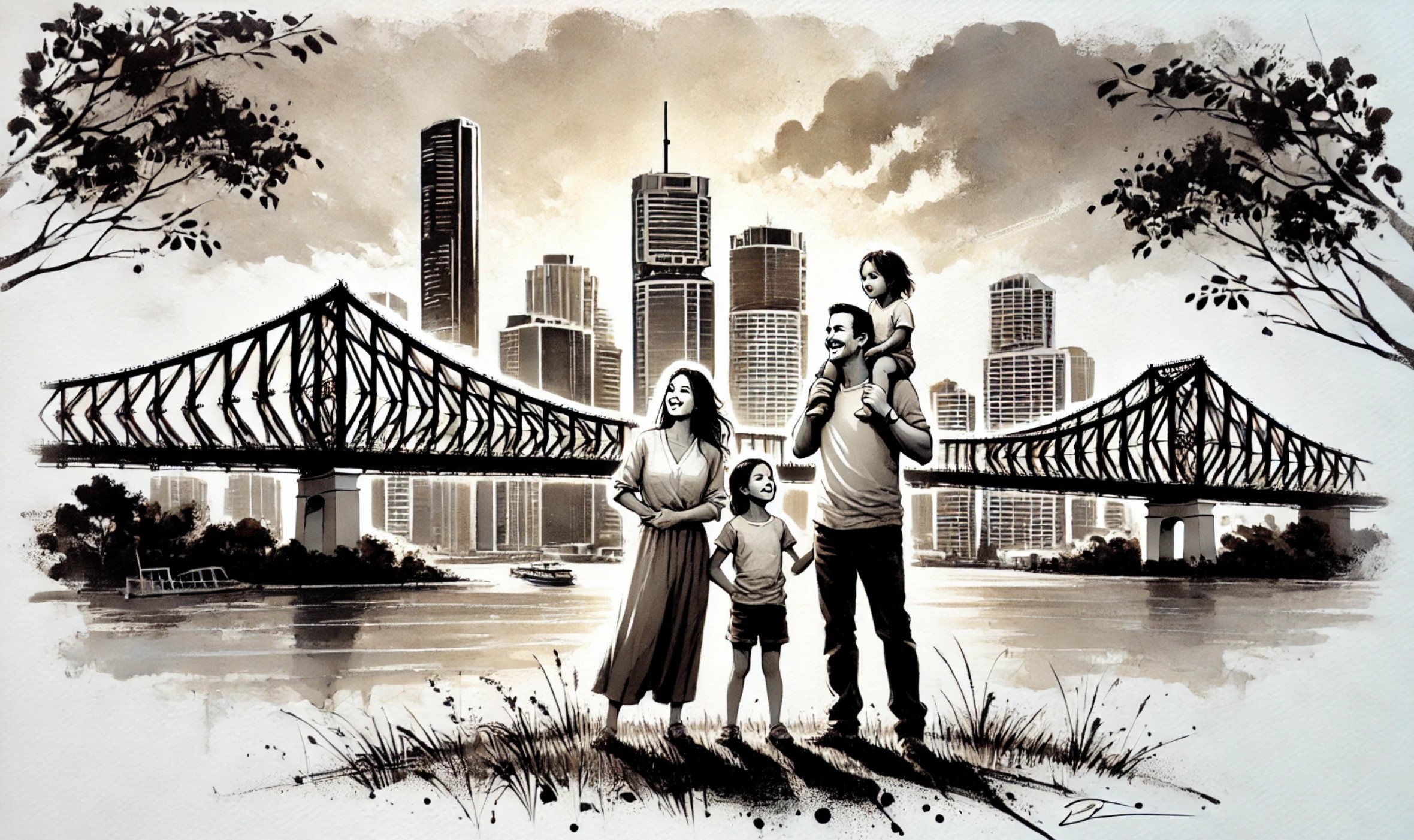
Brisbane’s appeal is strongest when career, housing and lifestyle all improve together.
Infrastructure: Brisbane is growing, but growing pains are real
Brisbane’s infrastructure story is a major reason people are watching the city. The 2032 Olympic and Paralympic Games have sharpened the focus on transport, venues and precinct planning.
The Queensland Government’s 2032 Delivery Plan transport page identifies transport upgrades including Logan and Gold Coast Faster Rail, Brisbane Metro expansion, station upgrades and road projects. Transport and Main Roads says the Logan and Gold Coast Faster Rail project will double tracks along the 20 km Kuraby-to-Beenleigh corridor, increasing rail capacity and improving reliability.
This is positive for Brisbane’s long-term outlook, but it should not be romanticised. Growth also means congestion, construction disruption, planning debates and pressure on housing supply.
Migration and population: slower nationally, but Brisbane remains attractive
National migration settings and state nomination programs affect labour supply, student movement, rental demand and long-term city growth. The Migration Queensland website says Queensland’s 2025–26 State Nominated Migration Program opened with 2,600 places, including 1,850 Skilled Nominated visa places and 750 Skilled Work Regional visa places.
For Brisbane, this means population growth may become more measured than the immediate post-pandemic surge, but the skilled-worker and family-relocation story remains relevant.
Who should seriously consider the move?
Brisbane is less compelling if your career depends heavily on Sydney-based finance, media, corporate HQ networks or very specialised senior roles that rarely appear outside Sydney or Melbourne.
Risks and trade-offs
Brisbane is not an escape from every problem. It has its own pressure points.
| Risk | What can go wrong | How to reduce the risk |
|---|---|---|
| Housing competition | Brisbane property and rents have moved sharply. You may get better value than Sydney, but not in every suburb. | Shortlist suburbs early, inspect in person, and budget for temporary accommodation if renting first. |
| Smaller job market | There are good technology and professional roles, but fewer of them. Senior niche roles can be harder to replace quickly. | Speak to recruiters before moving and confirm whether your exact skill set has local demand. |
| Climate | Brisbane winters are excellent, but summers can be humid, stormy and uncomfortable for people used to Sydney’s climate. | Visit in summer before committing, not only in winter or spring. |
| Commute assumptions | Some outer corridors can be slow, and public transport quality varies widely by suburb. | Test the actual school and work commute at peak times before signing a lease or contract. |
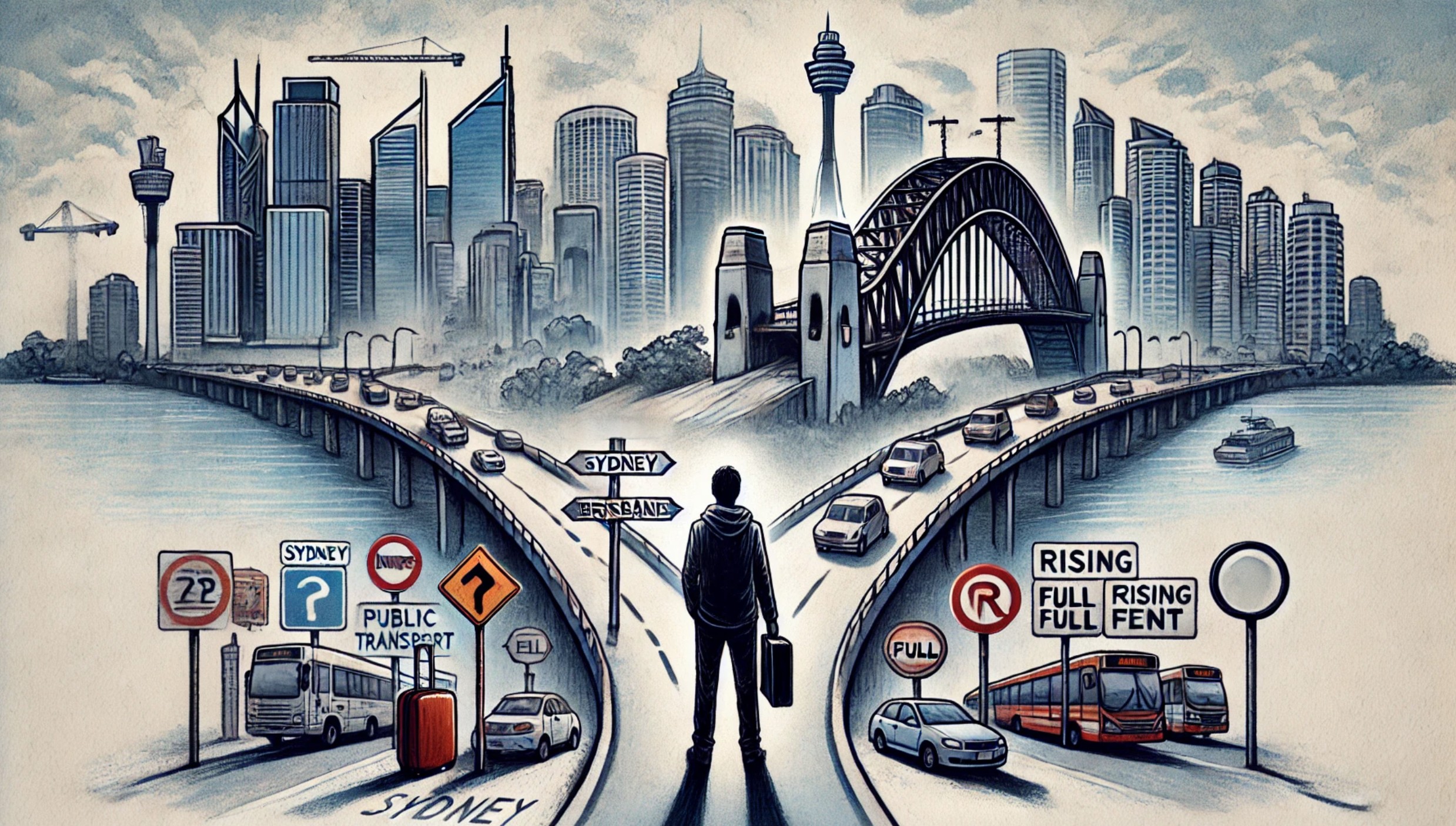
The move can improve quality of life, but only if the numbers and suburb choice make sense.
Before moving from Sydney to Brisbane
- Visit for more than a weekend. Work remotely from Brisbane for a week if possible and test real commute times.
- Compare after-tax income and housing costs. Include stamp duty, rent, mortgage repayments, school fees, insurance and car costs.
- Shortlist suburbs by lifestyle first, then commute. Brisbane is not one market; inner, north, south, west and bayside areas feel very different.
- Speak to recruiters before deciding. Especially if you work in cloud, cyber, AI, infrastructure, healthtech, fintech or government consulting.
- Check schools and childcare early. Family logistics can matter more than the headline property price.
- Plan for summer. Humidity and storms are part of the package.
- Check flood and storm risk. Review property-specific risk before renting or buying.
- Model one-car vs two-car living. Some Brisbane suburbs are much easier with a car.
- Keep a Sydney fallback plan. Do not burn professional bridges during the transition.
- Rent before buying if unsure. A six-to-12-month rental can save a costly suburb mistake.
Final view: Brisbane is not the next Sydney, and that is the point
Brisbane’s appeal is not that it copies Sydney. It is that it offers a different balance.
Sydney still wins on scale, career depth, beaches and global-city energy. Brisbane wins when your goal is a more practical home, less daily friction, a warmer outdoor lifestyle and a growing economy that still has room to mature.
If you are an IT professional or family feeling squeezed by Sydney, Brisbane is worth a serious look. But treat it like a proper relocation project, not a fantasy escape. Visit, test the job market, model the housing costs and choose the suburb carefully.

For many Sydney households, Brisbane is no longer just an alternative. It is a serious Plan A.
Moving from Sydney to Brisbane: FAQ
Is Brisbane still cheaper than Sydney in 2026?
Generally yes for many buyers and renters, especially when comparing family homes. But Brisbane is no longer cheap in an absolute sense, and desirable suburbs near rail, schools, the river, bayside or the inner city can be very competitive.
Should I rent first or buy straight away?
Renting first is usually safer if you do not know Brisbane well. It lets you test schools, commute times, climate, suburb feel and weekend lifestyle before committing to a purchase.
Is Brisbane good for IT and cloud jobs?
It can be, especially for cloud, cyber security, data, infrastructure, health technology, government transformation and consulting. But the market is smaller than Sydney, so it is smarter to test demand with recruiters before moving.
What is the biggest mistake Sydney people make when moving to Brisbane?
The biggest mistake is assuming Brisbane is automatically easier. Housing is competitive, commutes vary widely, summers are humid, and some specialised roles are harder to replace than in Sydney.
Which Brisbane areas should Sydney families research?
There is no single answer. Inner suburbs suit city access, northern and southern corridors suit different commute patterns, western suburbs can suit schools and space, and bayside / Redlands areas suit a coastal lifestyle. Start with work location, school needs and budget before falling in love with a suburb.
Useful references
- Australian Bureau of Statistics: Regional Population 2024–25
- Australian Bureau of Statistics: National, State and Territory Population
- Department of Home Affairs: Permanent Migration Program planning levels
- Migration Queensland: State nominated migration program
- Domain: March 2026 House Price Report
- Choose Brisbane: Key industries
- Queensland Government: 2032 Delivery Plan transport legacy
- Queensland TMR: Logan and Gold Coast Faster Rail
- SeaLink: North Stradbroke Island ferry information